


Booksellers’ Picks. Books We Love to Recommend.
Bonus: Books We’re Excited About Right Now
As we prepare for our inaugural Winter Books Salon, it feels like the right moment to add our own voices to the Community Bookshelf - a growing list of books recommended by our readers, special guests, partners, and collaborators. This shelf reflects not just what we sell, but how we think, read, and try to understand the world.
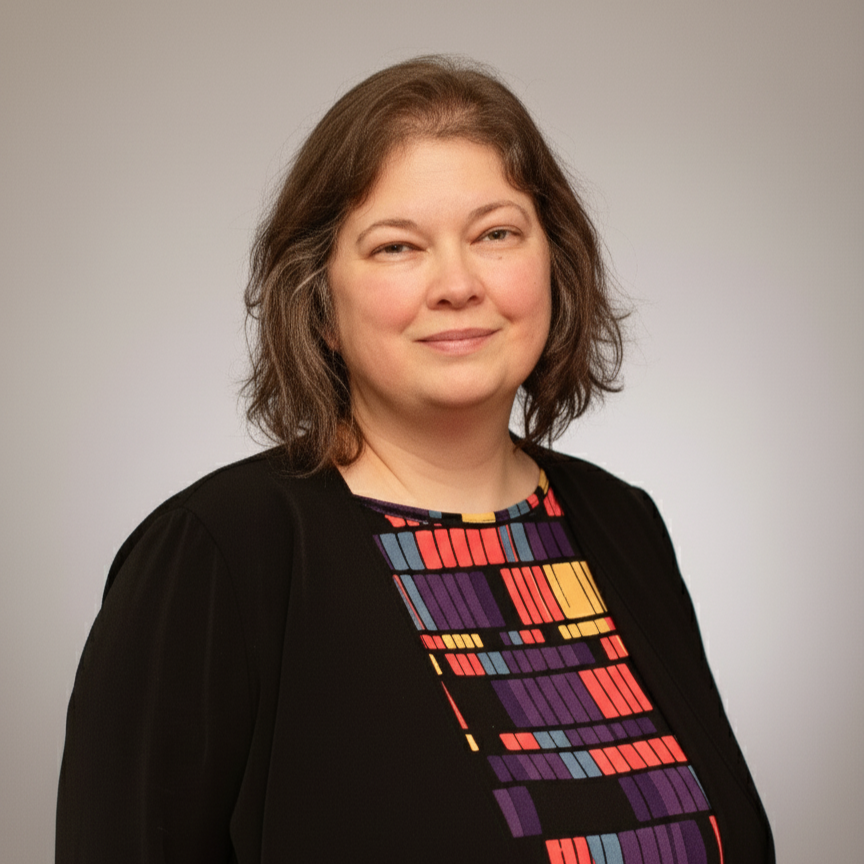
I’m Julia, proprietor of Staunton Books & Tea, and this is a glimpse into how our shelves came to look the way they do.
When I opened Staunton Books & Tea, I naturally oriented the selection around what I love to read - primarily nonfiction. International fiction, on the other hand, arrived almost unconsciously, shaped by my own background. I didn’t realize it at the time, but one of my earliest visits to Staunton already held the seed of that direction.

I still remember one of my first visits to Staunton, before the shop existed. I wandered into Black Swan and tried to find Three Comrades by Erich Maria Remarque. I wanted to read it aloud to my husband - he hadn’t read it yet. I asked the owner behind the counter, with what
was then my very imperfect English, “Do you have Three Commerce?” He didn’t understand. I tried again: a European author, a novel, something-something… He smiled and pointed me toward a corner with three shelves of European and non-American literature. That moment stayed with me. It was when I first grasped how vast the American book market is - and how little of it I truly knew. Most of what I had read until then (and, honestly, much of what I still read) came from Russia, Ukraine, the former USSR, or Europe.
That history shaped Staunton Books & Tea. Our fiction selection has an international focus, and over the years I’ve heard again and again that it feels different - less familiar, more exploratory, full of unexpected perspectives. That impulse is also what led to the creation of our International Books Club, where we discover stories from all around the world.
So here are a few books I regularly recommend in the shop.

One customer once said something that stayed with me. After telling me, “You have such a great selection”, a phrase we hear several times a day, I sometimes ask people why they feel that way. She explained, “It looks like you have books for people who want to learn more about this world.” Of course, every bookshop could make that claim. But I think she touched on something real. I’m especially drawn to books written by scholars and thinkers- not for other academics, but for people like us, trying to understand and navigate the world we’re living in.
That brings me to Timothy Snyder. For a while now, I’ve been recommending On Freedom to almost everyone. I gifted it to several friends this year because it feels urgently necessary. Snyder moves beyond the usual “left” and “right” binaries and offers a framework for rethinking freedom, society, and responsibility outside our exhausted political language. The final chapter, with its concrete calls to action, is especially powerful. On Tyranny remains an essential companion.
Another author who resonates deeply with me is Rutger Bregman, the Dutch historian. His book Humankind argues for a radically different understanding of human nature - one rooted in cooperation rather than cruelty - and explores how our social systems might be rebuilt around that premise. Reading it during the early days of the Russian–Ukrainian war was disorienting; reality seemed to contradict his thesis at every turn. And yet, I still agree with him. I believe most people are fundamentally kind - though easily manipulated, which is another conversation entirely. As long as there are dreamers imagining a kinder world, humanity has a chance. His more recent book, Moral Ambition, offers thoughtful and practical guidance for those who want to act, not just hope.
I would place David Graeber alongside Bregman. The Dawn of Everything, his final book, challenges conventional narratives about history and social organization. Like Humankind, it insists that a better world is not only imaginable but historically grounded. Graeber shows that many ways of living and governing have existed, and that change is not only possible but necessary.
If this list makes me sound naïve, I understand. The news alone is enough to extinguish optimism. To balance that, I often recommend Spin Dictators by Sergei Guriev and Daniel Treisman. The book analyzes modern authoritarian regimes that masquerade as democracies. While parts of it now feel dated - Russia, for instance, no longer pretends - it remains a sharp guide to recognizing the warning signs of democratic erosion. It’s a sobering but useful lens.
You might hope that my fiction recommendations are lighter. They are not.
Much of the fiction I recommend comes from Russian and Ukrainian authors. Mikhail Bulgakov may be the most important writer in my life. I first read The Master and Margarita in high school, the year it was officially added to the curriculum in Russia. It was a revelation. A blend of satire, fantasy, romance, farce, and political critique, the novel captures the absurdity and terror of life under totalitarianism with astonishing imagination. To fully grasp its references, one almost needs a guide to everyday Soviet life - which is why I often suggest pairing it with Svetlana Alexievich’s Secondhand Time.
I also frequently recommend the Strugatsky brothers, especially Hard to Be a God. The novel explores the moral dilemma faced by progressive, humanistic observers from an advanced future society as they interact with a brutal, hierarchical world stuck in its own dark age. The book asks a painful question: can you force progress without becoming barbaric yourself? And its answer is deeply unsettling.
Finally, Vladimir Sorokin. Day of the Oprichnik imagines a near-future Russia ruled by a modernized czar and enforced by a brutal personal army. It is grotesque, icy, and terrifyingly prophetic. I’ll let readers draw their own parallels.
Bonus: Books I’m Excited to Read Soon
Julian Barnes, Departure(s) – I haven’t read Barnes before, but I’m intrigued by this meditation on travel, memory, and impermanence.
David Epstein, Inside the Box – The question of whether constraints spark creativity has long fascinated me; I even wrote a paper on it in my creativity class, using Bulgakov as a case study. I’m eager to go deeper.
C. Thi Nguyen, The Score – I’m drawn to books that examine the systems shaping our lives, and this promises to be one of the most interesting.
Maria Reva, Endling – This novel was recommended at a literary birthday party, and it immediately sparked my curiosity. I’m drawn to the absurdist sensibility it promises, especially when absurdity becomes a way to tell deeper truths about survival, displacement, and the strange logic of our world.
And finally, here are Chelsea’s recommendations. Come to our Winter Salon if you’d like to hear why she loves these books:
Mark Z. Danielewski, House of Leaves and Tom’s Crossing
R.F. Kuang, Katabasis
Susanna Clarke, Piranesi and Jonathan Strange & Mr Norrell
Shirley Jackson, The Haunting of Hill House and We Have Always Lived in the Castle
Emily Brontë, Wuthering Heights
Virginia Feito, Victorian Psycho
Jeff VanderMeer, Annihilation
Books are conversations across time, borders, and experiences. These are some of the voices currently shaping ours - and we’re excited to share them with you.


